Please note that in the matching principle of accounting, the actual payment date doesn’t matter; It is important to note when the work was done. When a clear revenue match simply isn’t feasible, you typically record the expense in the period it occurs in, following the basics of accrual accounting. However, the matching principle matches expenses with the revenue they helped generate, as opposed to being recorded in the period the actual cash outflow was incurred. In this principle, all the entity’s accounting and cost details should always be realistic and separate from any personal assumption or the need to create a well-drawn image for your firm materiality ledger.
Reduces the chance of reporting incorrect profits during a specific accounting period
The SEC enforces compliance with GAAP for public companies in their financial filings. This https://mooresodanus.com/what-is-static-budgeting-vena/ oversight promotes fair presentation and helps prevent misleading financial reporting. Additionally, while GAAP is essential for U.S. companies, international businesses must also consider IFRS when operating in global markets.
Under the straight-line method, that would create $2,000 of amortization expense each year during the decade the patent contributes to your business.
By recording certain expenditures as assets rather than immediate expenses, companies can ensure a clearer financial picture and align costs with the revenue generated from those assets.
Together, they help you create more meaningful income statements, making sure costs aren’t just recorded when they happen, but also in the same period as the revenues they help you earn.
For example, if a company mistakenly recognizes $10,000 in expenses in the current period when they belong to the next period, it would lower the net income for the current period.
Therefore, the material accounting and inventory of these items represented the remaining value on a balance sheet at month end.
Visibility into key metrics like expense timing and revenue recognition trends enables proactive corrections before financial close.
Step 5: Ensure the reporting is GAAP-compliant
Per the matching principle, expenses are recognized once the income resulting from the expenses is recognized and “earned” under accrual accounting standards. One of the main duties of a bookkeeper is to keep track of the full accounting cycle from start to finish. The cycle repeats itself every fiscal year as long as a company remains in business. Properly capitalizing costs can lead to a clearer financial picture, providing insights into total capital deployed on assets and improving the accuracy of financial statements.
How to Analyze a Profit and Loss Statement (P&L)
There are times, however, when that connection is much less clear, and estimates must be taken. Now, if we apply the matching principle discussed earlier to this scenario, the expense must be matched with the revenue generated by the PP&E. In the past, the “first in, first out” (FIFO) method was used to measure the value of beverage inventory. Then it was decided that the most efficient way to measure the value going forward was to use an average weighted cost. Disclosure of the change is required during the month the change was made, so the stakeholders in the business see and understand the variance attributable to the change in accounting methods. This principle states that the financials must fairly and conservatively represent the business’s current financial situation.
Sign Up for Money Tips
Reconcile RegularlyConduct frequent reconciliations between expense and revenue accounts to detect discrepancies early. Regular review of deferred revenue and accrued expenses helps maintain accurate records and prevents reporting errors. Automate AccrualsManual journal entries can lead to delays and inconsistencies. Implement best accounting what is the matching principle in accounting reconciliation software with automation to handle accruals automatically, improving efficiency and ensuring that expenses are recorded in the correct accounting period.
Hence, in the issuer’s book of account, some amount pertains to the coupon to be paid to investors monthly.
Similarly, it gives external stakeholders, such as prospective lenders and investors, reliable data they can use to decide if they want to work with you.
Instead of expensing the entire cost upfront, depreciation spreads the expense across multiple periods, matching it with the revenue the asset generates over time, ensuring accurate financial reporting.
By adhering to GAAP guidelines, you ensure that your financial reporting is transparent, holding you accountable to investors and stakeholders.
The matching principle, a fundamental rule in the accrual-based accounting system, requires expenses to be recognized in the same period as the applicable revenue.
The matching principle in GAAP states that revenues should be recognized when earned and expenses when incurred.
How does GAAP differ from International Financial Reporting Standards (IFRS)?
Generally accepted accounting principles (GAAP) comprise a set of accounting rules and procedures used in standardized financial reporting practices.
It enhances accuracy and transparency by ensuring reported profits reflect true performance within a given accounting period.
To properly assess a business, it’s critical to also look at the balance sheet and the cash flow statement.
He authored an award-winning workshop on Hospitality Financial Leadership and has delivered it to hundreds of hotel managers and leaders.
HighRadius leverages advanced AI to detect financial anomalies with over 95% accuracy across $10.3T in annual transactions.
The matching principle means you need to record expenses tied to a given amount of revenue in the same period you recognize related income.
So, the balance sheet generated after the actual transaction will not reflect these accounts, as the amount in these accounts gets net off with the supposed account. In the balance sheet, these accounts (if they have a reasonable amount entered) are listed under Current Assets or Current Liabilities based on the nature of the account. The intuitive dashboard and real-time reporting tools streamline routine reporting tasks so you can spend less time worrying about the books and focus on running your business.
Understanding the matching principle in accounting
Let us now understand the practicality of the matching principle of accounting through the examples below. In addition, even seemingly small shifts in your estimates can have a significant impact on how your costs are matched to revenues over the years. For example, depreciating a $35,000 piece of equipment over an eight-year versus a 12-year useful life could swing your annual deduction by more than $1,400. For instance, say you hired a subcontractor to help you deliver the consulting services from the previous example.
He authored an award-winning workshop on Hospitality Financial Leadership and has delivered it to hundreds of hotel managers and leaders. David coach’s hospitality executives and delivers his Financial Leadership Workshops throughout the world, helping hotels, owners and brands increase profits and build financially engaged leadership teams. On the flip side, Bookkeeper360 Review all possible negative activity should be captured that affects the period reported on. For instance, the hotel had not yet received the electricity bill for the month and it was needed to close the books; err on the side of accruing the largest consumption to date rather than the smallest. Basically, investors and all the stakeholders need to know what is going to happen in the future, or at least as much information as possible to make the best decisions possible for financial stability.
It’s also instrumental in confirming that all receivables and payables are recorded correctly, so there are no surprises lurking in your financial statements. The adept practice of bank reconciliation radiates benefits that extend far beyond balancing numbers. This proactive approach not only prepares you for a seamless audit process but also keeps your business ready for financial analysis and informed decision-making.
Helping organizations spend smarter and more efficiently by automating purchasing and invoice processing. Only book-side adjustments require journal entries. Use tools like the ROI calculator alongside reconciliation data. Create journal entries for items needing book adjustments. Create and send invoices, track payments, and manage your business — all in one place.
Aside from having your bank account and general ledger account balance match, there are other reasons why a bank reconciliation should be completed regularly. Your bank statement balance may be overstated since it doesn’t include any outstanding checks that have not yet been cashed. For a variety of reasons, the balance on your bank statement will rarely match your book balance or general ledger balance.
Handling Overdrafts and NSF Checks
Ensure the opening balance on your bank statement matches the opening cash balance in your ledger. It’s best to perform reconciliations monthly, right after receiving your bank statement, to keep records current and easier to verify. Reconciling bank statements is one of the most effective ways to uncover fraud, such as altered checks, duplicate payments, or unauthorized transfers. Bank reconciliations are typically performed by accountants, bookkeepers, or business owners to ensure every transaction, such as deposits, withdrawals, and fees, is accurately recorded. A bank reconciliation is a critical tool for managing your cash balance.
By understanding the timing and nature of transactions, businesses can optimize their cash flow and make informed decisions about budgeting, planning, and forecasting. By regularly reconciling your bank accounts, you can have confidence in the accuracy of your financial reports. By regularly reconciling your bank accounts, you can catch these errors early on, preventing them from causing larger issues down the line. It involves matching the transactions recorded in your company’s books with the transactions recorded by the bank.
Unauthorized Activity
Not reviewing your bank statements carefully.
An outstanding check, for instance, has been deducted by the company but has not yet cleared the bank, resulting in a temporary difference that will resolve naturally.
If you can’t complete the reconciliation process using your accounting software, you can create a reconciliation template using a Microsoft Excel spreadsheet, which can be helpful when adding up your adjustments.
Perform bank reconciliations on a regular basis, ideally monthly or quarterly, depending on the volume of transactions and the size of your business.
By comparing your records with the bank’s, you can quickly identify any unauthorized withdrawals or suspicious activities, allowing you to take immediate action.
In practice, it involves matching records from your bank statement (or another cash account statement) with transactions that have already been posted in your ERP, general ledger, or main accounting record. When you get your financial information right and your accounting records match the bank’s records when it comes to the amount of cash you have in your accounts, it means you have successfully completed the process and can be stress-free. Hope now you know why it is important to reconcile your bank statements and how it can impact the small business accounting directly. After you’ve followed these bank reconciliation rules or steps and your bank balance matches the balance on your business books, your transactions have been reconciled successfully. A mistake that many small business owners make is not setting the opening balance of their business accounts to that of their bank account before they start recording transactions in their accounting records. Business reconciliation is the process companies use to match internal records with external statements, such as bank statements, credit card statements, or vendor invoices.
In case you’re wondering what is a bank reconciliation and what else the process entails, This blog aims at answering your questions and provides you with some practical advice to help ensure your books are up to date!
Mark any unexplained differences for investigation, as these could be recording errors, missing receipts, or even bank mistakes.
If there’s any income that isn’t accounted for on the bank statement (or vice versa) find out why.
ABC Company’s bank statement for December reflects an ending balance of $46,125, while the ending balance in their general ledger account for December is $43,250.
Hence, Company A was able to make the necessary adjustments to its records by adding back the missing deposit and recording the cheque as an outstanding one.
Ensure the opening balance on your bank statement matches the opening cash balance in your ledger.
How to reconcile a bank statement
Modern startup accounting software and banking tools have revolutionized the reconciliation process. This is also a good time to verify that your adjusted balance aligns perfectly with your bank statement’s ending balance. Alongside this, you’ll need your own financial records, whether they’re meticulously maintained in a checkbook register, tracked in accounting software, or organized in a personal spreadsheet.
These tools can automate certain tasks, reduce errors, and provide real-time insights into your financial position. This will make the reconciliation process more efficient and accurate. Keep detailed and organized records of all financial transactions. These are transactions that you have recorded but have not yet been processed by the bank. Bank reconciliation is particularly important for businesses of all sizes. Firstly, it helps you identify and rectify Register A Lei Number For Your Company errors in your financial records.
From Detecting Fraud to Tracking Cash Flow: The Multifaceted Benefits
Therefore, you can verify your records and find out if there is any error by comparing the balance shown on the bank statement with the company records. By verifying their bank account amount with their internal financial statement records, an organization may ensure that all payments have been handled correctly. – Enhanced transparency in the company’s operations due to the bank reconciliation process providing a direct, high-level overview of all processed transactions alongside the visibility of the relevant people responsible for each task. Company A noted an ending balance of US$500,000 in its records, but its bank statement revealed an ending balance of US$540,000.
Before we move on let’s stop for a second and understand that it is crucial to enter all your transactions into your business accounting system first and then you can move on to bank reconciliation. The ultimate goal of reconciliation is to ensure that both internal records and external statements are balanced and equal, demonstrating accurate financial health. The main purpose of bank reconciliation is to confirm that your business’s financial records are both accurate and complete. By aligning bank records with internal books, businesses can make more informed financial decisions.
The process of bank reconciliation extends well beyond checking an account balance. Lastly, automating the reconciliation process can improve efficiency by reducing the time spent on manual entry, minimizing errors, and ensuring that all transactions are tracked accurately in real-time payments. Small businesses should perform bank reconciliation at least a few days after the month ends, while companies with a high volume of transactions must reconcile daily. Once you’ve identified the causes of these discrepancies, the next step is to follow a structured process to reconcile your bank records with the bank statement. Missed transactions, bank fees, or errors in recording deposits and withdrawals are some common discrepancies during bank reconciliation.
Know your bank’s policy for reporting and resolving errors or fraud. You may want some of the information for the next account reconciliation. Keep your documents and records of all of your changes, including source documents and details of the reconcilement and adjustment process.
It’s important to keep in mind that consumers have more protections under federal law in terms of their bank accounts than businesses. Most importantly, reconciling your bank statements helps you catch fraud before it’s too late. Reconciling your bank statements allows you to identify problems before they get out of hand.
The goal of reconciling your bank statements is to pinpoint any discrepancies between your records and the bank’s and to correct them. MargBooks, a smart accounting cloud software designed for Indian businesses, offers an easy-to-use bank reconciliation feature. A Bank Reconciliation Statement (BRS) is a summary prepared by businesses to match their internal financial records with their bank statement. Missing some transactions in the accounting system causes differences that are often hard to reconcile between the bank statement and the balance sheet. Check all transactions to confirm that the closing balances on the balance sheet and the bank statements match.
AI-powered reconciliation tools excel at pattern recognition, automatically matching transactions with 95%+ accuracy while flagging unusual items for human review. Schedule quarterly reviews of your reconciliation process to identify bottlenecks, recurring issues, or opportunities for improvement. Manual reconciliation is time-consuming and error-prone. This creates accountability and ensures reconciliation doesn’t get pushed aside during busy periods. The longer you wait between reconciliations, the more difficult it becomes to identify and resolve discrepancies. Incorrect amounts, whether due to data entry errors or miscommunications, can also create discrepancies that are difficult to resolve.
CONNECT TO YOUR FAVORITE TOOLS
This will help them to monitor their cash flow, manage their liquidity, and comply with their tax and reporting obligations. In this section, we will qualitative characteristics of financial statements explore some of the common causes of these discrepancies and how they can be avoided or resolved. You should also verify that the bank has recorded the correct dates, amounts, and descriptions for each transaction. For example, you may find that the bank has charged you an incorrect fee, or that a customer has made a double payment, or that a vendor has issued a refund that you were not aware of. Learn when and how to seamlessly transition to a new bank to improve service, reduce fees, and support growth.
Where possible, separate the roles of those who record transactions from those who reconcile and approve them. This makes discrepancies easier to spot and fix before they compound. While monthly reconciliation is a minimum standard for most mid-sized companies, many teams with higher transaction volumes do it weekly or even daily.
This process helps identify matches and discrepancies between the two records. Personal reconciliation is the process individuals use to balance their personal finances. The primary goal of reconciliation is to confirm that the records agree with each other and that the amounts recorded as leaving an account match what was actually spent. One key process that ensures the integrity and reliability of financial information is reconciliation. (Figure)The bank reconciliation revealed that one deposit had cleared the bank two weeks after the date of the deposit. An employee was struggling in balancing the bank reconciliation.
Therefore, the organisation would be able to buy itself a lot more time to work on what it does best – growing the business to achieve greater heights. – Greater confidence in the company’s accounts as a result of the high precision that automated solutions are able to offer Once these steps have been completed, the information can then be saved within the database of the accounting software as an audit trail for long-term safekeeping. There have been situations in which the bank refuses to deposit a cheque because the money will be drawn from a foreign bank account.
Through the Unlimited Marital Deduction, the government lets spouses pass assets to one another at death estate tax-free. When Gene died suddenly, Marjorie immediately became the sole owner of their $1.5 million estate by operation of law, circumventing the probate courts. This ownership strategy is widely used by friends, life partners, parents and their children, among others. A tenancy in common is effectively the opposite of joint tenants. However, a joint tenant can be restricted from transferring or selling his or her interest without the consent of the other owner which may lead to disputes. Title can be in one person’s name alone or the asset can be held in joint tenancy, tenancy by the entirety or as tenants in common.
Which is Better: Joint Tenants or Tenants in Common?
A joint tenancy can be created in almost any type of property. A tenancy in common is another form of co-ownership. Joint tenancy is a form of ownership by two or more individuals together.
This is not the only consideration when choosing an ownership structure, however. The property does not go through probate; it automatically transfers to the survivor. Each owner can specify who will inherit their share of the property through a will or other means. One owner cannot leave their share of the property to anyone else in their will or through the intestacy rules.
What happens to joint tenancy when one dies?
If the property is owned under joint tenancy, this means that the co-owners are 'joint tenants' with equal interests in the whole property. As joint tenants, you have equal rights to the whole property. the property automatically goes to the remaining co-owner(s) if you die, regardless of whether you have a will or not …
Quicken WillMaker & Trust by Nolo
If the ownership share goes to the deceased’s spouse or civil partner, no tax is due on that transfer, regardless of whether they are owned as joint tenants or tenants in common. Structuring your ownership of property as a joint tenancy can be an important part of your estate planning process because it can be an effective tool to transfer assets outside of probate. If you want to create a joint tenancy or take possession of property as joint tenants, make sure that your lawyer or real estate agent is very careful about the phrasing in the deed or will. If you own property and your ownership is structured as joint tenancy, New York law may permit the transfer of the property outside of the probate process after one of the owners passes away. Should one of the owners die, their share in the property automatically transfers to the other joint tenants.
Joint Tenants or Tenants in Common: Inheritance Tax Implications
Each type of ownership has different requirements and consequences, as a New York City joint tenancy lawyer can explain.
If the conveyance specifies that the grantee is taking jointly, this is construed as applying to all grantees, regardless of their marital status, unless there is a contrary intent expressed or implied by the transfer instrument.
Tenancy in common is when two or more people own a property, but not necessarily in the same proportions.
Joint property, also known as joint tenancy, is nothing but a planning pitfall.
If your spouse is disabled when you die, the probate court will “inherit” the joint tenancy property and determine how and when it is to be used for your spouse’s benefit. In this respect, joint tenancy is similar to other forms of ownership. While joint tenants are living, they can sell their interest in the joint property and give it away. If it is your intent to leave your property to your spouse and then to your children, joint tenancy is not for you. The previous joint tenants merely had the use of the property while they were alive. For example, a deed or will might include instructions that read “to A and B, as joint tenants with a right of survivorship, and not as tenants in common.”
Control exactly how your estate is distributed — including who your beneficiaries will be, when they will receive your legacy and how they will receive it. For instance, you can own property solely in your own name. Whether your Joint Tenant is your spouse or someone else, the implications of this exposure to loss are frightening. That means you effectively lose control of half the property.
Joint Ownership of Real Property in New York
If there are children from a prior relationship, the owners of the property may prefer for the property to pass as it normally would under Minnesota inheritance laws. But in that case, the surviving spouse must show the IRS that the joint tenancy property was in fact community property—that is, that it was bought with community property funds. She sued for the other half, arguing that she was the only true owner because the joint tenancy had been created only for estate planning purposes.
In this case, Peter’s children would have been able to inherit a share of the family home. When Janice dies a few years later, the property will form part of her estate. Peter could not leave his share of the home to his children from a previous relationship. Each owner receives a percentage of the sale proceeds when the property is sold.
What does “joint tenants with the right of survivorship” (JTWROS) mean?
A very taxing situation occurs, however, when you live in a community property state but hold title to an asset in Joint Tenancy with your spouse. If the sum of all of the survivor’s property is less than the amount that can be passed free of estate tax, this may not be a problem. At the death of the survivor, the value of the entire property is included in the survivor’s estate. As an estate taxation planning device, Joint Tenancy is not optimal.
There Is No Control, and Property May Pass to Unintended Heirs
While probate is avoided, joint tenants may not be able to agree on what to do with the real estate. Each homeowner in a joint tenancy gets an equal ownership interest in the real estate. Although joint tenancy has been assailed for years by many estate planning experts, it remains—unfortunately—a very popular form of property ownership. Real estate owned by one or more persons as tenants in common gives a percentage ownership to each person, and upon that owner’s death, their percentage share goes to their estate. However, owning a property as joint tenants gives the remaining partner full legal ownership and control, regardless of whether the deceased left a will. Furthermore, the surviving joint tenant may be subject to gift tax liability if he or she attempts to share the funds in the account with other intended heirs after the original owner’s death.
Property owned in joint tenancy automatically passes, without probate, to the surviving owner(s) when one owner dies. Among the options we assist you with include structuring ownership of property in a strategic way. Joint tenants have equal rights to rent, control, manage, and possess the real estate. However, if a conveyance is to two non-married people as tenants by the entirety, an estate in joint tenancy is created. For example, if you jointly own a house with a friend, and your friend is a reckless spender, the creditor can sue your friend in court and have the real estate partitioned and sold, even over your objection. The way in which owners hold title can make a difference to whether creditors can attach the property and what happens procedurally in the event of one owner’s death.
By contrast, if you transfer the solely owned property to joint tenancy with your spouse, the tax basis of the half you give stays exactly the same; it isn’t stepped up. If you make your spouse a joint tenant with you on property you own separately, the surviving spouse could miss out on a potentially big income tax break later, when the property is sold. If you make someone else a joint tenant of property that you now own yourself, you give up half ownership of the property. Joint tenancy is usually a poor estate planning choice when an older person, seeking only to avoid probate, puts solely owned property into joint tenancy with someone else. If you’re a joint tenant, you can’t leave your share to anyone other than the surviving joint tenants. The process of transferring the property is really easy and the joint tenancy is the controlling factor that determines how the property is to be transferred.
Law Office of Jeanne M. Reardon
Imagine that Peter and Janice, who have both been married before, own their home as joint tenants. Since the ownership is separate, each person can act independently when making decisions about the property. Due to continual changes in the tax laws, the need for legal counsel is essential in estate planning. A person should not open POD accounts or execute transfer on death instructions or beneficiary deeds without first consulting an estate planning attorney. Missouri’s Pay On Death (“POD”), Transfer On Death (“TOD”) and Beneficiary Deed statutes provide for the disposition of many types of property at the time of death without probate proceedings and without some of the disadvantages of joint tenancies. As a result, joint ownership of a safe deposit box may complicate matters rather than making them simpler.
If, 20 years later, you sell it for $400, IRS rules let you subtract your $100 basis, leaving $300 in taxable profit.
A major feature of joint tenancy ownership is that it comes with a right of survivorship.
A few years later, Raine remarried a man with two children of his own.
Ironically, otherwise well-informed consumers choose Joint Tenancy because they’ve heard it is a cost-free replacement for a Will and that it avoids probate.
Tenancy in common is when two or more people own a property, but not necessarily in the same proportions. This means you must act together as a single entity when making decisions about the property. Joint tenancy is when two or more people own a property equally. In 2011, the Missouri Legislature created a trust specifically for tenancy by the entirety property called a Qualified Spousal Trust. Anyone with a concern or needing help in this area should see their lawyer about a durable power of attorney or place a trusted person on the account as “agent.” Oral understandings about what is to be done with the account balance upon death are frequently misunderstood and often forgotten.
Under when do you need joint tenancy a tenancy by the entirety in New York State, upon the death of one spouse, the other spouse owns the property free and clear of any encumbrances that may have been caused by the other spouse. If a married couple divorce after taking title to the property as tenants in entirety, they then become tenants in common. Sometimes, under state law, a joint tenancy will automatically convert to a tenancy in common.
Should a married couple be joint tenants or tenants in common?
While most married couples opt for joint tenancy due to its straightforward inheritance rules, tenancy in common can offer greater flexibility, especially for older couples concerned about estate planning and bequests.
Related Legal Documents, Forms, and Contracts
Eghrari Law Firm can provide you with advice on whether you should own property as joint tenants so you can transfer that property easily after death. If any of these conditions aren’t met, then no joint tenancy exist and owners will typically own the property as tenants in common instead. A joint tenancy is a way to structure the ownership of real property, such as a house or land. At Pulgini & Norton, our real estate lawyers can advise people in Boston and the surrounding cities on the implications of holding property in a joint tenancy. When joint tenants hold the title, it automatically passes to a surviving owner without the need for probate.
That’s one reason why parents with children from a prior marriage should rarely, if ever, own property in Joint Tenancy with a new spouse. Whenever a parent holds property in Joint Tenancy with a spouse, children are effectively disinherited. But upon her death 15 years later in 2013 or later, the entire estate — now worth over $2 million — was subjected to probate. But when the second/last owner dies, the entire estate goes through the often costly, time-consuming and nightmarish probate process. It’s an ownership method so pervasive, many consumers often say they know of no others. Under tenancy in common, when a tenant in common passes away the shares that belong to the dead owner pass to heirs under the laws of Minnesota inheritance.
The same principle applies to Capital Gains Tax purposes – gains are split equally for those who own as joint tenants and in accordance with each owner’s share. Under these statutes, the persons who are to receive the property on the death of the original owner may be designated as beneficiaries for accounts in financial institutions, securities, real estate and other instruments of title. Thus, on the death of one co-owner, his or her interest will not pass to the surviving owner or owners but will pass as an individual share according to his or her will or, if there is no will, by the law determining heirs.
Familiarizing yourself with these common scenarios can help you navigate the complexities of overtime pay. Knowing your rights empowers you to advocate for fair compensation and ensures that you are treated equitably in your workplace. Additionally, if your employer fails to pay you the correct amount for overtime, you have the right to seek resolution.
News to know: January 2026 labor market and pay legislation update
They’re when down after the first period, and when their opponent scores first this season. We saw Michigan State play in the biggest college hockey game of the year last weekend, as https://milagrosamentebien.org/bookkeeping/plumbing-bookkeeping-tips-for-zephyrhills-wesley/ they beat Penn State outdoors at Beaver Stadium in front of a crowd of 74,575. One of the fastest players in the Big Ten had the wheels on display on this empty net goal, making up a ten-stride distance to hawk down Ben Robertson and steal the puck for the ENG. Eva Geitheim is a contributor to the Breaking and Trending News team at Sports Illustrated.
What is FLSA status? Exempt vs. non-exempt employees
The result is more detailed W-2 reporting and a greater emphasis on accurate classification and data capture. On January 30, 2026, the Internal Revenue Service released the final General Instructions for Forms W-2 and W-3 for the 2026 tax year. Over the past 20 years, the Super Bowl has averaged 3 hours, 37 minutes from kickoff until the final whistle. For further guidance related to employer requirements involving Form W-4, consult IRS Tax Topic 753. Share this infographic with employees and consider using Foreign Currency Translation the linked sample employee communication to help them better understand the answers to these questions.
While corrections officers typically earn in the mid-$60,000 range and deputies about $90,000 annually, overtime has pushed many well beyond $175,000 in total compensation.
However, for tax year 2025, employees who have eligible cash tips or qualified overtime will be able to seek a tax deduction on their 2025 tax return when filing in 2026.
Overtime pay refers to the additional compensation that employees receive for working more than a designated number of hours in a workweek.
Here are several scenarios that illustrate how overtime pay is calculated and the various factors that can influence it.
Michigan State has won the last two Duels after Michigan took five straight from 2018 to 2023.
The players must have spent at least four straight years in the national competitions of their new country.
To assist employees in determining how to prepare their Form W-4, employers can direct employees to the IRS Form W-4 instructions.
Did No Tax on Tips pass?
At its core, the FLSA protects workers by ensuring they receive fair compensation for hours worked beyond the standard 40-hour workweek. However, certain employees can be classified as “exempt” from these overtime protections if they meet specific criteria. Under the One Big Beautiful Bill Act, employers must identify and report by January 31, 2026 the FLSA-required portion of employee overtime pay for the entire 2025 calendar year. In order to comply with the OBBB, it is critical for agencies to identify and properly report qualified overtime compensation under FLSA. Employers should maintain records distinguishing FLSA-required overtime from other types of additional pay to support accurate W-2 reporting.
There will be transition relief for employers so they won’t face penalties in the 2025 tax year for not meeting the new reporting requirements, as long as they comply with the current federal FLSA overtime requirements.
As with tips, the IRS clarifies that overtime compensation is still generally subject to federal income tax withholding and payroll taxes, even though certain deductions may apply at the individual level.
The Hoosiers had a lead as many as 14 in the first half, but Wisconsin has trimmed it.
He chased after Boyd through screens and wouldn’t allow him any daylight while attacking the basket.
Proper management of overtime can help avoid legal issues while ensuring that employees feel valued and fairly compensated.
What information may be helpful for employees to review as they prepare their Form W-4?
And as a reminder, The Hockey News’ Ryan Kennedy and Michael Traikos will be on the ground in Milan when the men’s tournament begins. “Warren Averett” is organized under two separately owned Alabama limited liability companies. Warren Averett, LLC is a licensed independent public accounting firm that what is overtime provides tax and attest services as well as additional ancillary services to its clients.
What happens if I claim the wrong amount?
Below is a high-level summary of the most notable changes in the final 2026 instructions. Super Bowl XLVII in 2013 was the longest, lasting 4 hours and 14 minutes. The new FLSA salary exemption rules are definitely a big deal, but they don’t have to land you on the naughty list next year.
Common Questions About the 2025 Overtime Tax Deduction
In Italy, the games will be governed by the International Ice Hockey Federation (IIHF), and there are several distinct differences in the rules. Should both teams reach the end zone, the contest shifts to sudden death format, identical to the scenario where both squads convert field goals. But if one team settles for a field goal, a touchdown by their opponent clinches victory. David Pastrnak appeared to score the game-winning goal 22 seconds into overtime with a snipe past Vasilevskiy, but the goal was waived off due to a delayed slashing penalty on the Bruins. The whistle was barely audible over the crowd, leaving Pastrnak and Jeremy Swayman caught mid-celebration.
A high ROE ratio may indicate that a company is generating a high return on its equity, which could mean that it is profitable or that it has a high leverage. For example, a low P/B ratio may indicate that a company is trading below its book value, which could mean that it is undervalued or that it has poor growth prospects. In this section, we will summarize the key takeaways and recommendations for using book value as a tool for financial analysis and decision making. Each of these methods has its own advantages and limitations, depending on the purpose and context of the valuation.
Straight-Line Method
As you can see, the bond discount is amortized evenly over the 10 years, resulting in a constant bond accretion of $10.73 per year (except for the last year, which is $10.72 due to rounding). If the bond is sold at a premium, the carrying value of the bond will decrease each year until it reaches the face value at maturity. If the bond is sold at a discount, the carrying value of the bond will increase each year until it reaches the face value at maturity. Alternatively, you can also calculate the interest expense by adding the annual bond accretion to the coupon payment, which is the face value multiplied by the coupon rate.
Discounted bonds present a fascinating opportunity for investors, offering the potential for significant gains when purchased below their par value and held until maturity. Conversely, when rates fall, the market value of existing bonds increases. This inverse relationship is due to the fact that new bonds are issued at the current higher what is a bad debt ratio for a business rates, making older bonds with lower rates less attractive unless they are sold at a discount. Understanding these factors is crucial for investors looking to capitalize on the potential gains from purchasing discounted bonds. The discount on a bond can be influenced by a myriad of factors, ranging from changes in interest rates to the creditworthiness of the issuer. In the world of finance, discounted bonds are a fascinating subject that intertwine market dynamics, investor perceptions, and economic indicators.
Balancing a bond portfolio is akin to conducting an orchestra; each instrument, or bond, must play its part in harmony with the overall investment strategy. Over the 5-year period, this discount would be amortized, gradually increasing the book value each year until it reaches the face value of $1,000 at maturity. If the same bond was purchased at a $50 discount (i.e., for $950), the book value would start at $950.
During a recession, for instance, investors may flock to the safety of government bonds, driving up their book value.
It’s the annual interest rate established when the bond is issued, and it’s a fixed figure that doesn’t change.
Here, the carrying value decreases over time as the premium is amortized.
It may be at par, at a premium, or at a discount.
It is essential for accurately reporting periodic interest income and determining the eventual capital gain or loss upon sale or maturity.
It helps in determining whether a bond is overvalued or undervalued by the market, which can signal buying or selling opportunities.
As such, it represents the net worth of a company or how much it would be worth to shareholders if the company was liquidated. The term book value refers to a company’s shareholders’ equity. Investors can use this metric to help determine whether a company is under or overvalued. It approximates the total value shareholders would receive if the company were liquidated. Gordon Scott has been an active investor and technical analyst or 20+ years. This, in turn, creates value for shareholders and positions the company for sustainable success in land developer cant use completed contract method the competitive business landscape.
Preferred under accounting standards, this method amortizes premium or discount based on the bond’s carrying value and market interest rate at issuance. Understanding the role of interest rates in bond valuation is crucial for both issuers and investors, as it directly affects their financial strategies and outcomes. When interest rates rise, new bonds come to market with higher yields, making existing bonds with lower rates less attractive, thus decreasing their price. This purchase price is established by the interplay between the bond’s fixed coupon rate and the prevailing market interest rate, or yield, at the time of acquisition. Similarly, an issuer may sell a bond at a discount if they expect the interest rates to rise, as they will lower their borrowing cost and reduce their refinancing risk. For example, an investor may buy a bond at a discount if they expect the interest rates to fall, as they will lock in a higher yield and benefit from the bond accretion.
However, if the stock price increases and bondholders begin converting their bonds into shares, the book value of the remaining bonds on the balance sheet would decrease as the liability is transferred to equity. The bonds would be removed from the liabilities section, and the company’s equity would increase by the corresponding amount. If issued at a premium or discount, the book value will adjust over time as the premium is amortized or the discount is accreted.
Related AccountingTools Courses
It represents the ownership interest of the shareholders in the company. The book value of debt is usually the face value or principal amount of the debt plus any accrued interest. If the fair value of the acquired company later dropped to $120,000, the goodwill would be impaired by $30,000 ($50,000 – $20,000) and the book value of goodwill would be $20,000 ($50,000 – $30,000). The book value of goodwill is usually the original amount of goodwill recorded at the time of the acquisition.
Real-World Examples of Discounted Bonds
Ultimately, the decision to convert bonds into equity is a strategic one that hinges on a confluence of market dynamics, company performance, and the comparative benefits of debt versus equity holdings. By studying these examples, investors and financial professionals can refine their strategies for investing in and valuing convertible bonds. For instance, a company with a strong credit rating and stable stock price may issue convertible bonds with a lower coupon rate, as the conversion option adds value to the bond. Market interest rates, the stock price of the issuing company, and the overall health of the economy are key factors that can cause the book value of these bonds to fluctuate.
A bond represents a loan made by investors to the entity issuing the bond, with the face value being the amount of principal the bond issuer borrows. The various terms surrounding bond prices and yields can be confusing to the average investor. For bonds issued at a discount, the carrying value increases as the discount is amortized; for bonds issued at a premium, it decreases as the premium is amortized. The carrying value of a bond typically changes over time, especially if it was issued at a premium or discount. Once the maturity date of a bond is reached, there will be no remaining discounts or premiums to amortize, so the face amount of the bond will then match its carrying value. Learn the difference between corporate bonds vs treasury bonds, including risks, returns, and investment strategies for beginners.
For example, if a bond has a face value of $1,000 and made interest or coupon payments of $100 per year, then its coupon rate is 10%. Bond book yield is a term you might come across in the world of bonds, but what does it actually mean? For example, a bond with a $1,000 face value and a 5% coupon rate would pay $50 in interest each year. A bond’s coupon rate is the annual interest rate paid to the bondholder, usually expressed as a percentage of the face value.
Strategies for Investing in Discounted Bonds One of these assumptions that applies to this learning module is that all bond interest and principal cash flows occur as promised. You should only engage in such activities if you fully understand the risks involved and are able to bear the potential loss of capital.
What is the most common and accurate method of accounting for bond accretion and how does it work?
The discount on a bond occurs when the market interest rates exceed the coupon rate of the bond, causing it to be sold below its face value. This means that each accounting period, a portion of the bond discount is moved from the balance sheet to the income statement as interest expense, increasing the cost of borrowing over time. A bond discount occurs when the market interest rate exceeds the coupon rate of the bond, causing it to trade below its par value. Understanding the mechanics of bond discount is essential for investors, issuers, and accountants alike. For investors, the amortized bond discount can be treated as additional interest income, which is taxable. From an accounting perspective, bond discount presents unique challenges and opportunities, particularly when it comes to reporting the debt’s book value on financial statements.
The face value of a bond, also known as its par value, is the amount the issuer agrees to repay at maturity.
To calculate the interest expense using the straight-line method, multiply the carrying value of the bond at the beginning of the year by the market rate.
If the market value is lower than the book value, it means that the company is undervalued or has hidden liabilities that are not accounted for in the book value.
For instance, a corporate bond from a company with a shaky financial status might offer a high yield to compensate for the default risk.
When interest rates rise, the market value of existing bonds falls, as newer bonds offer higher yields.
Investors can use this metric to help determine whether a company is under or overvalued.
In contrast, the book value of a bond is the original cost of the bond, adjusted for any amortization of discounts or premiums.
Bond A, a 10-year Treasury with a 2% coupon, might see its price drop as investors pivot to new bonds with higher yields. If market interest rates increase to 6%, new bonds offer better returns, so the original bond’s price might drop to, say, $950 to yield a competitive rate. We will now use discounted cash flow analysis to calculate bond prices and show how the discount rate used as well as a bond’s features, such as its coupon rate and time-to-maturity, affect pricing.
A Treasury Inflation-Protected Security (TIPS), for example, offers a yield that adjusts based on inflation, ensuring the investor’s real return is maintained. Beyond YTM, other factors such as the bond’s duration, credit quality, and the interest rate environment play crucial roles in influencing a bond’s attractiveness and potential returns. Consider a bond issued at a discount, with a face value of $1,000 but sold for $950.
If the bond is purchased for $95,000, the carrying value will gradually increase each year as the discount is amortized, eventually reaching $100,000 at maturity. For example, if our $100,000 face value bond was purchased for $95,000 and has a five-year maturity, the $5,000 discount is amortized over five years. It’s essential for ensuring that financial statements reflect an accurate picture of a company’s financial position.
I’m a leading startup-focused CPA, and my team has worked with many accounting software systems – QuickBooks Online is the best option for startups in 2024. When choosing your accounting software, think of it as more than just a tool. You’ll be able to scale your business more quickly and spend less time battling spreadsheets if you have the right features and AI-driven capabilities. The artificial intelligence (AI) that powers contemporary SaaS accounting tools automates repetitive processes like revenue forecasting, fraud detection, and reconciliation. AI also guarantees compliance by seeing possible mistakes before they become an issue, which helps you avoid fines and penalties. If you’re ready to level up your SaaS accounting, this guide will walk you through the 15 best accounting software tools tailored to meet your needs.
We do this at Kruze for our clients, and if you are using the software to do DIY your accounting, you should to.
It’s also crafted to streamline financial management for businesses of all sizes.
We understand Biotech companies operate in a different environment and our team has deep expertise in the specific requirements your company will face.
Tipalti works with a wide choice of ERP systems and accounting software.
The ability to integrate with such tools and provide real-time insights is key to providing a snapshot into your startup as it stands in the here and now.
Choosing the right software is a big decision, but it doesn’t have to be overwhelming.
Mobile Access and App Integrations
Look for software providers that offer 24/7 customer support, dedicated https://dimensionzen.com/streamline-your-finances-with-expert-accounting-services-for-startups/ account managers, and a robust knowledge base with guides and tutorials. Your financial data is like a treasure chest—it needs to be locked down tight. QuickBooks’s AI-powered Insights panel highlights key financial changes like rising costs or income trends to help users spot potential accounting issues at a glance. However, criticisms focus on the software’s reporting limitations, inadequate advanced inventory functions and the declining quality of customer support. Some report on inconsistencies in inventory adjustments and express frustration with generic help articles that inadequately address specific issues. ZarMoney’s invoicing view is straightforward, giving users the essentials to create, edit and track payments without unnecessary extras.
It’s a fantastic choice for mid-sized companies that want to automate their payment processes from end to end.
Zoho Books is an excellent solution for mid- to larg-sized SaaS companies that are looking for an affordable, user-friendly accounting system with features tailored to their business model.
This helps simplify tracking income and expenses and is essential for accurate financial reporting.
With over 30 million small businesses trusting FreshBooks and users saving an average of 553 hours per year, accounting has never been easier.
NetSuite’s pricing varies depending on which product configuration your company selects, the add-on modules required, the total user count, contract duration, and specific industry requirements.
You can ask the sales team to show you exactly how the software would handle your most complex billing scenario.
Zoho Books
Whether you’re sizing the market, raising capital, or creating a detailed cash flow model, the level of detail will vary. ARR is generally the most important metric tracked by subscription companies. It shows the scale of a SaaS business, and can be used to track growth over time.
Best for Enterprise accounting software with advanced reporting capabilities
If you’re looking for a accounting for startups light-weight business banking solution still tailored to the needs of startup founders, Mercury Bank is a popular choice. The thing about accounting software is that you can manually create entries – they are called “journal entries.” This means that you could actually make transactions up out of thin air. Here are some of the most frequently asked questions startup founders ask us about accounting software. Now I do have to give QuickBooks Online some props here because they have been, it’s so much more reliable and so much faster and way more powerful that QuickBooks keeps pushing the window. When we first started Kruze five years ago probably would have been like a $5 million company, should have switched to NetSuite. So QuickBooks is getting stronger but NetSuite is the gold standard for that late-stage startup, that’s got a full-on big finance team internally.
This could be based on the number of invoices you send, contracts you manage, or customers you have.
Let’s explore the main types of accounting SaaS software that can set you on a path to financial clarity.
With our support, paying your bills becomes a hassle-free process and making sure clients know how much and how to pay you, ensuring your cash flow stays on track.
Many of the best SaaS accounting software options provide access to financial data at any time.
You can also get Elite for $84/month ($56/month yearly) or Ultimate for $218/month ($145/month yearly). Brokerage services for Atomic are provided by Atomic Brokerage LLC, a registered broker-dealer and member of FINRA and SIPC and an affiliate of Atomic, which creates a conflict of interest. For more details about Atomic, please see the Form CRS, Form ADV Part 2A and Privacy Policy. For more details about Atomic Brokerage, please see the Form CRS, the Atomic Brokerage General Disclosures. You can check the background of Atomic Brokerage on FINRA’s BrokerCheck.
TaxJar
Kashoo’s intuitive interface ensures accessibility for users with varying accounting expertise. Suited for both small and large enterprises, ZarMoney provides powerful tools while maintaining accessibility. Seamlessly integrating with broader enterprise functionalities, it unifies essential business processes into a centralized platform. QuickBooks currently offers a discount across all pricing plans—$1 per month for 3 months. TRUiC’s team of researchers, writers, and editors dedicate hours to ensure startupsavant.com’s articles are actionable and accessible for both startup founders and startup enthusiasts.
Billings
There are so many choices; what you need is to select a solution that matches your unique business needs, industry challenges, and growth ambitions. QuickBooks Online is a well-established player in the accounting industry and a very popular accounting solution in the U.S. It’s known for its strong inventory management features, a great mobile app, invoice customization, and assisted bookkeeping feature–QuickBooks Live.
When introducing a new product, for instance, costs could include those related to manufacturing, marketing, distribution, and research & development. These are benefits that add to the project’s or decision’s total worth, even if they cannot be valued in money. Examples of non-monetized advantages include the value of increased customer happiness or staff morale.
Before you can know if a project proposal might be valuable, you need to compare it to similar past projects to see which is the best path forward.
The decision to commit a crime, like any other economic decision, can be analyzed as a choice among alternative combinations of costs and benefits….
Understanding the potential benefits and related drawbacks aids in decision-making regarding new projects.
It’s important to understand that the cost-benefit ratio formula factors in the number of periods in which the project is expected to generate benefits.
Look over the costs and benefits of the project, assign them a monetary value and map them over a relevant time period.
Opportunity costs are typically included as a discount rate or cost of capital (in other words, what would cash earn if it was invested elsewhere instead of the new factory).
The global environment of business is shifting constantly, which requires solid decision-making.
Education Policy Choices
A construction company needs to compare two potential real estate development projects. The company doesn’t have the resources to engage in both, so it has to choose. Cost-benefit analysis identifies and places monetary values on the costs of programs. To calculate the total present value (PV) for the potential financial benefits, we use the expected useful life of the new equipment (five years) as our ‘r’ value in the PV formula and calculate PV for each year. If the NPV is a positive number and the CBA ratio is greater than 1, that means the net sales present value of the benefits outweighs the present value of the costs.
#3. Determine The Benefits
The cost-benefit analysis (CBA), or “benefit-cost ratio” (B/C), is a decision-making tool relied upon by corporations to quantify the economic viability of a potential project or investment. At IMD, we equip participants with the tools to make effective, data-driven decisions. Our “Business Analytics for Leaders” program integrates strategic tools like CBA to help leaders refine their decision-making process and navigate complex, real-world business challenges.
It can highlight possible costs and benefits in a form that is simple to comprehend and compare.
In those cases, calculating the net present value, time value of money, discount rates and other metrics can be complicated for most project managers.
For example, if you live in a town where there is almost no undeveloped land left, you may be in favor of a new law allowing the town to buy up all the remaining farmland to use for town parks.
But the concept of CBA as we know it dates to Jules Dupuit, a French engineer, who outlined the process in an article in 1848.
ProjectManager has the features you need to lead your project to profitability.
Define a Project Timeframe
One advantage of CBA is comparative analysis, which enables decision-makers to evaluate options based on objectives and choose one that maximizes benefits over costs. CBA is frequently used when deciding which activities an organization will fund as part of its strategic objectives. Also, it’s employed when considering the launch of a new program or discontinuation of service. Understanding the potential benefits and related drawbacks aids in decision-making regarding new projects. Ultimately, a well-designed CBA is a crucial tool for corporate decision-making.
Product
If things change, and they will, the Gantt is easy to edit, so you can pivot quickly. But the concept of CBA as we know it dates to Jules Dupuit, a French engineer, who outlined the process in an article in 1848. The value of the next best alternative that must be forgone in order to pursue a certain action or decision. Get instant access to video lessons taught by experienced Foreign Currency Translation investment bankers. Learn financial statement modeling, DCF, M&A, LBO, Comps and Excel shortcuts. On the other hand, the project benefit – which refers to revenue here – is as follows.
The concept was formally recognized in the 1936 Flood Control Act, which emphasized the importance of ensuring that the benefits of federal water improvements exceed their costs.
However, it’s important to note that a cost-effectiveness analysis may provide a more holistic overview that considers outcomes (such as human impact) rather than just costs.
This might be a proposal for a project, a corporate decision, a policy change, or any other circumstance where costs and benefits are measurable.
These are the factors most commonly included in financial evaluations and Cost-Benefit Analyses (CBA).
Once all cash flows are calculated, the cash flows are then discounted at the opportunity cost, usually WACC, or some other hurdle rate, to obtain the NPV of an action.
Everything from the website to the card reader is designed for a high-end client experience. And it’s the combination of nice design and simplicity that makes this tool truly unique. The software offers different pricing tiers to accommodate salons of various sizes and needs.
Make sure your salon accounting software gives you an overview of your cash flow that spans both earnings coming in and expenses going out.
Track the sales of each product and report on your top revenue drivers so you’ll know what product lines are working and what’s not selling.
Every beauty salon wants to make sure they are doing everything right, both with their accounting and with their products, so they can offer their customers what they deserve.
Mangomint represents a new generation of salon software that’s reimagining what these tools should feel like in 2025.
I have not had the chance to review this new feature yet, but by the looks of it, it would provide full payroll support.
Menu – Action – Mobile
Automate inventory, manage vendors easily, and get instant insights into sales, staffing, and performance—all in one platform. From filling every chair to retaining top talent, Zenoti helps you attract more clients, grow revenue, and deliver unforgettable experiences—at scale. The absence of such a feature could lead to miscommunications, affecting your salon’s overall functioning and customer service. ZarMoney fosters real-time team collaboration, improving the overall productivity of your salon.
TL;DR: A guide to salon payroll
Choose software that can integrate with other management tools you might be using, like appointment scheduling or CRM software, to Certified Bookkeeper streamline salon operations. As your salon expands, you may need advanced features or more user access, so choose a platform that offers scalable plans. All software platforms I recommend in this review are cloud-based and can be accessed via the web browser or via mobile or tablet app. However, some of the platforms also offer dedicated hardware to improve the POS experience. Mangomint does not come with a website builder as part of the platform. But, as you’ve probably noticed, Mangomint offers great integration support.
Key Benefits for Beauty Salons
Clients can also reschedule online without having to call in and take time away from your front desk. Vagaro allows you to integrate a booking widget on your website, run a pop-up, or send the visitor to a dedicated booking page. You can change the color to match your brand, but it is otherwise limited to the design from Vagaro. It fits on every website and nicely slides in from the side whenever someone clicks your “book now” button or link. While Mindbody has modernized for 2025 with Analytics 2.0 and enterprise-level marketing through ActiveCampaign, its core remains rooted in legacy software design. Securely bookkeeping for hair stylist connect to your bank account and credit cards and we’ll automatically import transactions so you can categorize them quickly and easily.
Find products similar to Offline Spa & Beauty Salon Accounting Software, For Windows, Free Demo Available
We’ll then look in-depth at each core feature with a side-by-side feature comparison.
Boulevard encourages new customers to use their integrated Boulevard Payments™ platform.
SlickPie supports multiple companies, making it suitable for salon owners with multiple locations or separate business entities.
Even with solid systems in place, it’s easy for payroll to feel complicated–and a small mistake can lead to overpaying, underpaying, or scrambling to clean things up at tax time.
Appointments are color-coded based on appointment status so you can get an overview at a glance.
Because the marketing suite integrates with POS and client information, you can track the success of your marketing campaigns right to the till.
Finally, think about how comfortable you are handling compliance on your own.
Xero provides a powerful blend of features designed for small business accounting. With a specific focus on ease of use and elegant interface design, salon owners will find it a useful tool for managing financial activities across operations. While not specific to accounting, adjusting entries project management features allow salon owners to track project costs and timelines, aligning financial and operational goals. FreshBooks offers a sleek, efficient accounting experience, primarily catering to small businesses and freelancers. Beauty salon owners can benefit from its user-friendly design, making it easy to manage day-to-day financials without requiring extensive accounting knowledge.
On Accelerate and higher-tier plans, there is no limit on the number of active employees, but the Starter plan is limited to 15 active employees at one time.
These quick-to-set-up applications are mobile-friendly, making it easy to include class schedules, appointments, staff lists, and more on your own hosted site.
In a salon setting, effective collaboration and communication among your team are key to ensuring smooth business operations.
It comes with built-in accounting software that will save you money on expensive accounting subscriptions later on down the line.
Square Appointments is a salon accounting and scheduling software to help you manage your business.
In this article, we’re diving into five top accounting software options designed with salons in mind. We’ve chosen each one based on what really matters to you—ease of use, essential features, and affordability—so you can focus on running your salon smoothly without breaking the bank. The client profile management feature further enhances salon operations and client accounts. The software maintains detailed records of client preferences, visit history, and even payment methods, so salons can deliver more personalized and streamlined services. Founded in 2001, Mindbody provides wellness businesses with specialized software covering almost every operational area – from appointment scheduling to payroll, inventory, reporting, and more.
Tips to Manage Your Hair Salon Accounting
You will see who is your most valuable client because you can quickly see a user’s address in the user’s profile display. You will also be able to compare your busiest months with others and take advantage of other reporting tools. Zenoti is ideal for larger salons, spas, and wellness chains, with robust enterprise-level features such as multi-location management, detailed employee performance tracking, and advanced reporting tools. Zenoti offers customizable packages, allowing businesses to select and pay only for the features they need. Running a successful beauty salon requires more than just a passion for beauty and style; it demands excellent business acumen and efficient financial management.
Obviously, the accrual method does a better job of reporting what occurred on December 27, the date that Servco actually provided the services and incurred the expense. Under the accrual method, revenues are to be reported in the accounting period in which they are earned (which may be different from the period in which the money is received). Since our website does not provide income tax information, you should seek tax advice from a tax professional or from IRS.gov. As a result, US GAAP requires most corporations to use the accrual method of accounting. The adjusting entries will require a person to determine the amounts and the accounts.
How to Organize Receipts and Expenses Efficiently
Column One contains the names of those accounts in the ledger which have a non-zero balance. Once the posting process is complete, accounts kept using the “T” format (debits on the left side of the “T” and credits on the right side) undergo balancing, which is simply a process to arrive at the balance of the account. For example, the entries in the Sales Journal are taken and a debit entry is made in each customer’s account (showing that the customer now owes the company money), and a credit entry might be made in the account for “Sale of class 2 widgets” (showing that this activity has generated revenue). Using the rules of double-entry, these journal summaries are then transferred to their respective accounts in the ledger, or account book. An important difference between a manual and an electronic accounting system is the former’s latency between the recording of a financial transaction and its posting in the relevant account.
Having entry numbers and standard entries should help to make the monthly closings more routine and efficient. If some journal entries must be written every month, it is helpful to assign journal entry numbers to these standard journal entries or recurring journal entries. The timeline will indicate what needs to be done and the sequence in which things need to occur. Similarly, the hourly payroll processed during the first few days in January and paid on January 6 is likely to include the cost of employees working during the last few days in December. For example, the electricity bill arriving on January 10 might be the cost of the electricity that was actually used in December.
If a company’s stock is publicly traded, earnings per share must appear on the face of the income statement.
As a truck driver, keeping your finances in order is crucial for maintaining a profitable and stress-free business.
Yes, our company has a team of experienced tax lawyers.
Yes, we offer a service called ‘accounting screening.’ We request your access to the electronic cabinet and documentation.
Each journal entry must have the dollars of debits equal to the dollars of credits.
You can earn either certification by passing exams, agreeing to abide by a professional code of conduct, and verifying your bookkeeping and accounting education and experience.
Bookkeeping for truck drivers may sound dull, but it plays a big role in the health of any trucking business. Bookkeeping may not be the most exciting aspect of running a trucking business, but it’s one of the most important. The top bookkeeping apps for truckers include QuickBooks, My CPA Dashboard, Rigbooks.com, and Q7. This will prevent any financial surprises and allow you to make informed decisions. Keep your receipts organized by category (fuel, repairs, insurance, etc.) to make it easier during tax season.
The two totals must agree—which is not by chance—because under the double-entry rules, whenever there is a posting, the debits of the posting equal the credits of the posting. As a partial check that the posting process was done correctly, a working document called an unadjusted trial balance is created. This process of transferring summaries or individual transactions to the ledger is called posting.
These reports will help you gain greater insights into the financial health of your small business. Additionally, the aged accounts receivables and aged accounts payables reports are helpful in knowing which clients have not paid and which vendors are yet to be paid. You’ll need to note the amount, the date, and any other important details to ensure you can accurately summarize your finances when it comes time for tax season. For both sales and purchases, it’s vital to have detailed, complete records of all transactions. Business bank accounts should always be kept separate from personal bank accounts.
If $3,000 has been earned, the Service Revenues account must include $3,000. Let’s assume that Servco Company receives $4,000 on December 10 for services it will provide at a later date. The company expects to receive an invoice on January 2 and remit payment on January 9. To illustrate, let’s assume that a company utilized a worker from a temporary personnel agency on December 27. The outstanding checks and deposits in transit do not involve errors by either the company or the bank.
Accounting software
Additionally, it’s important to recognize that the term “accounts” in bookkeeping refers to certain groups of transactions, rather than bookkeeping for truck drivers to actual business bank accounts. These features include business expense tracking, time-saving invoice generation and sending tools, project management capabilities, and bookkeeping services through Bench. Bookkeeping is the regular practice of updating a company’s financial records to reflect all financial transactions. This financial statement is similar to the balance sheet issued by a company. At that time they will be moved to an expense on the income statement.
Using Bookkeeping Software for Trucking Companies vs. Hiring a Bookkeeper
We track your days away from home and apply IRS-approved per-diem rates to maximize your deductible expenses. Whether you’re on the road full-time or managing multiple rigs, we keep your numbers clean and your business compliant. Your bookkeeping should support both financial and regulatory reporting requirements. Many drivers must submit fuel tax reports and maintain records for Department of Transportation (DOT) compliance. Bookkeeping isn’t just for tax season—it’s what keeps your trucking business running smoothly year-round. But sloppy or incomplete bookkeeping can quickly lead to missed deductions, IRS penalties, and cash flow problems.
Company
Examples include cash, investments, accounts receivable, inventory, supplies, land, buildings, equipment, and vehicles.
It will also reveal what is preventing the financial statements from being distributed sooner.
Thus liability accounts such as Accounts Payable, Notes Payable, Wages Payable, and Interest Payable should have credit balances.
For self-employed truck drivers, all of your trucking business expenses are likely deductible—even your vehicle expenses like fuel, tolls, and parking.
In terms of earning potential, accounting generally offers higher salaries than bookkeeping because it involves more complex financial analysis and strategic planning, according to the U.S.
A platform like FreshBooks, specifically designed for small business owners, can be transformational.
Waiting until crunch time to prepare documents and fix bookkeeping errors can be too late if the records are kept with many mistakes. The best results happen when a business implements a bookkeeping strategy over a period of time or builds a long-term working relationship with a qualified bookkeeper. Regardless, work with your bookkeeper and accountant to ensure the amount of cash left in the bank is sufficient for unexpected costs. Since good record keeping relies on accurate expense tracking, it’s important to monitor all transactions, keep receipts, and watch business credit card activity. This helps you get a big-picture perspective of your various accounts, which will help you set goals and priorities for your business. Our balance sheet template (pictured below) is a great way to track and analyze your financial health.
Hire a Professional Bookkeeper or Accountant
Not all of a company’s financial transactions that pertain to an accounting period will have been processed by the accounting software as of the end of the accounting period. This will allow for all of the income statement accounts to begin each accounting year with zero balances. The income statement accounts are also known as temporary accounts since the balances in these accounts will be closed at the end of the accounting year. In any event, the payment of cash is not the primary factor for determining the accounting period in which an expense is reported on the income statement.
Keeping up with the records in your small business might be a task you are willing and able to tackle yourself. They oversee and record all incoming and outgoing transactions, create budgets, balance ledgers and may even manage payroll. Proper planning and scheduling is key since staying on top of records on a weekly or monthly basis will provide a clear overview of an organization’s financial health. Bookkeeping tasks provide the records necessary to understand a business’s finances as well as recognize any monetary issues that may need to be addressed. It also includes more advanced tasks such as the preparation of yearly statements, required quarterly reporting and tax materials.
Liabilities are on the right side of the accounting equation.Liability account balances should be on the right side of the accounts. Assets are on the left side of the accounting equation.Asset account balances should be on the left side of the accounts. With double-entry accounting, the accounting equation should always be in balance. Even though the accounting software has eliminated the clerical errors that occurred because amounts were handwritten and the account balances were calculated manually, some other errors can still occur. The electronic speed of computers and accounting software gives the appearance that many of the bookkeeping and accounting tasks have been eliminated or are occurring simultaneously.
Among other things, you’ll want to gain a firm understanding of accounting principles, get comfortable using popular bookkeeping software, and learn how to work with spreadsheets. While some bookkeepers work full-time for a company, others offer their bookkeeping services as freelancers, taking on several clients, or treat this work as a side hustle. Bookkeepers maintain a company’s financial records using software. Bookkeeping is the practice of recording and organizing a business’s daily financial transactions and maintaining accurate financial records. As for errors made in tax accounting, a 1095-day period applies.
Ruth Sarreal is an editor and content strategist covering consumer banking topics at NerdWallet. A basis point or bp is equivalent to 1/100 of a percent. While we don’t cover every company or financial product on the market, we work hard to share a wide range of offers and objective editorial perspectives. Essentially, this means that your mortgage has an interest rate of 1.5%.
The U.S. federal government
For example, if an existing interest rate of 10 percent is increased by 1 basis point, the new interest rate would be 10.01 percent. Powell had previously come under fire by some economists and policy experts for moving too slowly, both in its hiking of rates to address inflation and in holding off on cutting rates as the economy wobbled. It is the first drop in the federal funds rate — or what banks charge each other for short-term loans — since the U.S. central bank lowered rates to nearly zero in March 2020 amid an economic standstill caused by the pandemic.
However, the government’s borrowing costs remain elevated compared to the ultra-low rate environment of recent years. Home prices remain elevated, and while lower borrowing costs may eventually help affordability, the housing market continues to face challenges from both price and financing perspectives. Markets had largely anticipated this cut, so the immediate reaction may be muted unless the Fed signals a more aggressive cutting cycle ahead. Here are the winners and losers of the Fed’s latest rate decision. Bankrate follows a strict editorial policy, so you can trust that we’re putting your interests first.
How much will a home equity loan cost monthly in 2026?
Other factors include your credit profile, product availability and proprietary website methodologies. This compensation helps us provide tools and services – like free credit score access and monitoring. We believe everyone should be able to make financial decisions with confidence.
High-yield savings account rates, which currently hover around 4-5 percent, will begin to fall as banks adjust to the new rate environment.
For example, if a bond yield moves from 7.45% to 7.65%, it is said to have risen 20 basis points.
“And the downside risks to employment have increased.”
Knowing how basis points work and how to calculate them can benefit you greatly during the homebuying process.
Many, or all, of the products featured on this page are from our advertising partners who compensate us when you take certain actions on our website or click to take an action on their website.
What is a stripped bond?
BPS is a common abbreviation for basis points, and BP for basis point. Here are the answers to some frequently asked questions about basis points. Seemingly small differences can mean hundreds or thousands of dollars depending on your specific loan terms. However, the total interest paid is $319,453.24, meaning you’ll end up paying $592.02 more over the life of the loan. Such changes don’t just influence the overall economy, but they can also impact your personal finances.
(It can be regarded as a stylized form of the four zeros in the denominator of “1/10,000”, although it originates as a natural extension of the percent % and permille ‰ signs).
Other factors include your credit profile, product availability and proprietary website methodologies.
Basis points, otherwise known as bps or “bips,” are a unit of measure used in finance to describe the percentage change in the value or rate of a financial instrument.
At a press conference to discuss the rate cut, Fed Chair Jerome Powell said the decision to ease more aggressively was based partly on the central bank’s confidence that inflation will soon reach policymakers’ goal of a 2% annual rate, as well as cooling employment.
For example, in June 2017, the Federal Open Market Committee (FOMC) increased the benchmark rate by 25 basis points to a range of 1% to 1.25%.
Annual Percentage Rate (APR): What Is It And How Does It Work?
The decision comes as concerns about the softening labor market have taken precedence over persistent inflation concerns. Founded in 1976, Bankrate has a long track record of helping people make smart financial choices. While the current inflation rate of 2.5% is still below the Fed’s 2% target, the central bank is confident that price growth is on a sustained downward path. For example, if you’re discussing an interest rate that is currently 5%, and you say it’s expected to increase 10% next month, that increase could be interpreted differently. A basis point is one hundredth of a percent, so 100 basis points is equivalent to 1%. She previously edited content on personal finance topics at GOBankingRates.
What Is The Federal Funds Rate And What Should People Do When It Adjusts?
Expense ratios of investment funds are often quoted in basis points. Since the basis is usually small, these are quoted multiplied up by 10,000, and hence a “full point” movement in the “basis” is a basis point. Since certain loans and bonds may commonly be quoted in relation to some index or underlying security, they will often be quoted as a spread over (or under) the index.
Whether you’re evaluating loan rates or investment fees, this calculator provides essential support for financial tasks. Basis points (bps) are commonly used in finance to represent changes in interest rates, yields, and other financial metrics. The Basis Point to Percentage Calculator simplifies the conversion of basis points into percentages. The term “basis point” has its origins in trading the “basis” or the spread between two interest rates. However, if the report says there has been a “100 basis point increase” from a 10% interest rate, then the interest rate of 10% has increased by 1.00% (the absolute change) to an 11% rate. A basis point (often abbreviated as bp, often pronounced as “bip” or “beep”) is one hundredth of 1 percentage point.
When it comes to mortgage loans, basis points are used to reflect changes in interest rates – which can affect your future monthly mortgage payment. The downside of the Fed cutting interest rates is that returns on savings accounts, money markets, and CDs will start declining. If you have an adjustable-rate mortgage, home equity line of credit, or variable-rate personal loan, your rates should begin to decline following the Fed’s action. The Fed’s key interest rate — known as the federal funds rate — is used by lenders to determine rates on credit cards and loans. The central bank’s federal funds rate is now in a range of 4.75% to 5%, which will give Americans a break on their monthly credit card, personal loan, auto financing and mortgage costs. Here’s a quick reference guide for converting basis points to percentages.
Now let’s say that interest rates are up 0.5% this week. Say for example, you have an adjustable-rate mortgage (ARM) with a mortgage rate of 6.5%, then the interest rate rises to 7%. If you’re considering buying a house and taking out a mortgage, chances are you’ll come across the concept of basis points sooner or later. Other factors, such as our proprietary website rules and whether a product is offered in your area or at your self-selected credit score range, can also impact how and where products appear on this site. Therefore, this compensation may impact what products appear and how, where, and in what order they appear within listing categories, except where prohibited by law for our mortgage, home equity and other home lending products.
Basis points are often used to measure a difference in percentages. Use it when you want to be precise in communicating changes in percentages. For example, let’s say your mortgage was charged at a rate of 150 basis points. This conversion is essential for financial analysis, allowing professionals and individuals to make informed decisions based on the precise impact of rate changes expressed in basis points. Since one basis point equals 0.01%, a change of 100 basis points equals a 1 percentage point change. Basis points provide a precise way to represent small changes in a percentage rate.
For example, when interest rates increase, you could end up paying more for your mortgage. Your Home Loan Expert tells you that interest rates have increased by 25 basis points. Unless you’re a math whiz, it may be mentally taxing to calculate extremely small or large changes using percentages or decimals. This means your interest rate rose by 50 basis points, and your mortgage payment will subsequently increase. Mortgage payments can either increase or decrease according to the market rates.
The conversion table below provides a better understanding of how basis points work. Also, since basis points are clearly defined units of measurement, using them can help to avoid ambiguity and confusion when discussing such precise figures. It’s much easier to summarize a change that small using basis points. In other words, 50 basis points equal 0.50%, and 100 basis points equal 1%. In this article, we’ll briefly discuss what basis points are and why they’re so important.
For example, if a report says there has been a “1% increase” from a 10% interest rate, this could refer to an increase either from 10% to 10.1% (relative, 1% of 10%), or from 10% to 11% (absolute, 1% plus 10%). The most common example is interest rates, where differences in interest rates of less than 1% per year are usually meaningful to talk about. Basis points are used as a convenient unit of measurement in contexts where percentage differences of less than 1% are discussed. The Fed’s forecast shows that its members are projecting that the median federal funds rate will decline to 3.4% at the end of 2025.
The half-point move signals that the Fed is acting aggressively to keep the U.S. economy from stalling, given that historically most rate cuts are 0.25 percentage points. This means that rates were increased by 0.25% percentage points from a range of 0.75% to 1%. Basis points, otherwise known as bps or “bips,” are a unit of measure used in finance to describe the percentage change in the value or rate of a financial instrument. Financial institutions use basis points to track percentage changes to a number of financial instruments – and this can affect your personal finances in many ways.
But as prices surged during the health crisis, the Fed repeatedly hiked rates in an effort to curb inflation. “I don’t see anything in the economy right now that suggests that the likelihood of a downturn is elevated — you see growth at a solid rate, you see inflation coming down and a labor market that is still at very solid levels,” he added. The Fed said the cut lowers the federal funds rate into a range of 4.75% to 5%, down from its prior range of 5.25% to 5.5%, which had been its highest level in 23 years. For example, in June 2017, the Federal Open Market Committee (FOMC) increased the benchmark rate by 25 basis points to a range of 1% to 1.25%. In most cases, basis points refer to changes in interest rates and bond yields.
If you want to convert basis points to percentages, divide by 100 (or move the decimal point two places to the left). The Fed’s 25 basis point rate cut signals a shift toward supporting the economy as labor market concerns take precedence over inflation risks. The Fed’s rate cut means that banks will likely begin lowering rates on savings accounts, CDs, and money market accounts. The Federal Reserve announced that it’s cutting interest rates by 25 basis points during its September meeting, lowering the federal funds rate to a https://tax-tips.org/accountants-2020/ target range of 4.00 to 4.25 percent. While a rate cut of half a percentage point will reduce borrowing costs, don’t expect more than a few bucks off most loan payments each month. To convert basis points to percentages, you must first convert the basis point into a decimal.
“And as I said, you can see our 50 basis point to move as as the commitment to make sure that we don’t fall behind.” But the Fed chair defended the central bank’s decision to wait until accountants 2020 September to cut. “A September cut, along with the possibility of at least one more this year, should be welcome news to investors,” said Joe Gaffoglio, CEO at Mutual Of America Capital Management, in an email ahead of the decision. “The Committee has gained greater confidence that inflation is moving sustainably toward 2%, and judges that the risks to achieving its employment and inflation goals are roughly in balance,” the Fed said in the statement. Still, the Fed’s economists are predicting that the unemployment rate could move up slightly by year end, rising from its current 4.2% to 4.4%, according to the central bank’s Summary of Economic Projections. Powell added that the labor market remains solid, though not as hot as it was during the pandemic, when labor shortages drove up wages and some businesses found it difficult to find new workers.








 Comments Off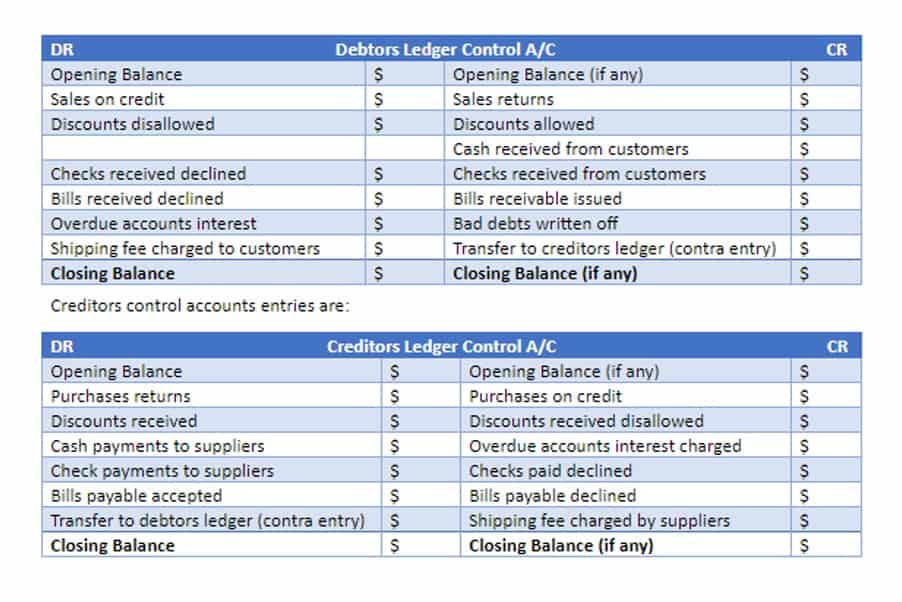








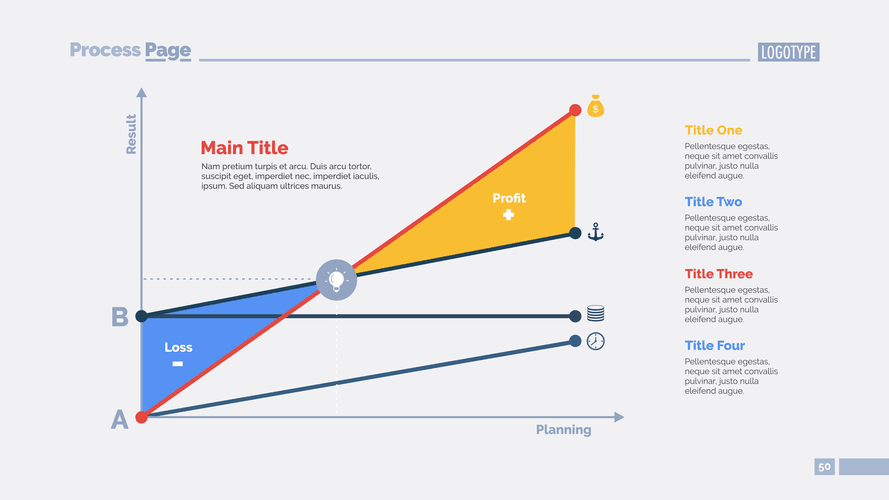



 Entries (RSS)